
Table of Contents
Feeling tired even after getting enough sleep? Have you noticed unexplained weight changes, hair thinning, mood changes or an unusual sensitivity to cold or heat? Sometimes, these symptoms may be related to thyroid problems, although other health conditions can cause similar changes.
The thyroid is a small, butterfly-shaped gland located at the front of the neck. Despite its size, it plays an important role in regulating metabolism, energy use, body temperature, heart rate and several other body functions. When the thyroid produces too much or too little hormone, it can affect how the body works.
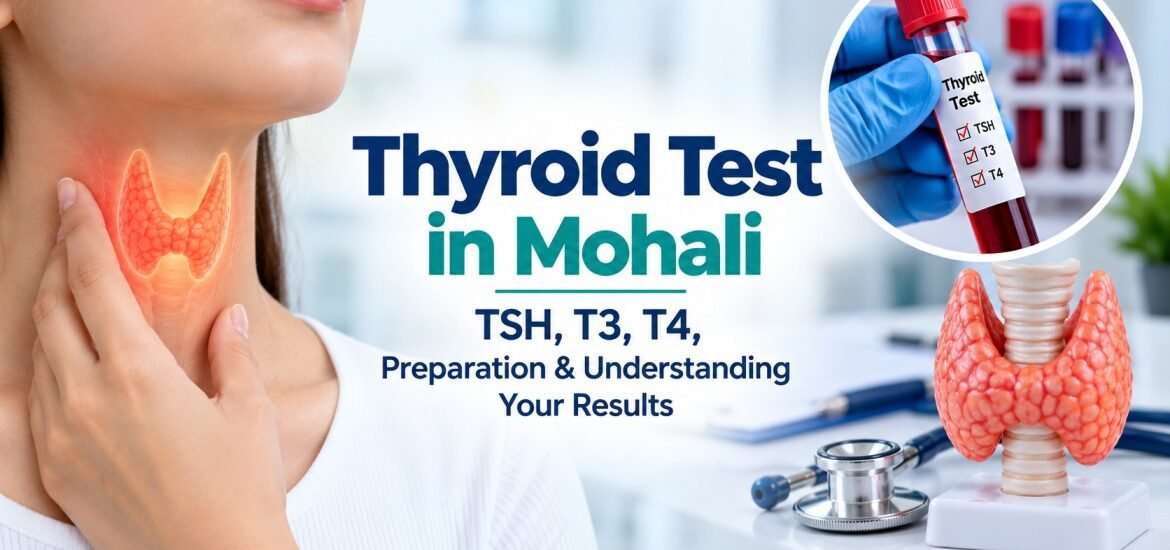
A Thyroid Test in Mohali can help assess thyroid function and provide useful information when symptoms or medical history suggest a possible thyroid disorder. The test commonly involves measuring thyroid-stimulating hormone (TSH), and depending on the situation, thyroxine (T4) and triiodothyronine (T3) may also be checked.
Understanding what these tests measure, how to prepare for them and what your report means can help you have a more informed discussion with your doctor.
What Is a Thyroid Test?
A thyroid test is a blood test used to evaluate how well the thyroid gland is functioning. Doctors may recommend it when a person has symptoms that could indicate an underactive or overactive thyroid, or when monitoring an existing thyroid condition.
The thyroid produces hormones that help regulate the body’s use of energy. These hormones also influence body temperature, digestion, heart function and other processes.
When hormone levels become too high or too low, the changes may develop gradually. Some people notice clear symptoms, while others may have only mild changes that are difficult to recognise.
A Thyroid Test in Mohali may be recommended for people experiencing unexplained fatigue, weight changes, menstrual irregularities, changes in heart rate or other symptoms that require medical evaluation.
It is important to remember that symptoms alone cannot confirm a thyroid disorder. Blood test results must be interpreted alongside the person’s medical history, examination and other relevant information.
Why Is Thyroid Testing Important?
Thyroid disorders can affect people of different ages. They may occur because the thyroid gland produces insufficient hormones or releases more hormones than the body needs.
Testing helps doctors identify possible changes in thyroid function and decide whether further investigation or treatment is needed.
Thyroid testing may be useful for several reasons:
- Investigating unexplained weight gain or weight loss.
- Evaluating persistent tiredness or changes in energy levels.
- Checking symptoms such as unusual sensitivity to cold or heat.
- Assessing an unusually fast or slow heartbeat.
- Investigating certain menstrual or fertility concerns.
- Monitoring people who already have a diagnosed thyroid condition.
- Reviewing thyroid function when certain medicines or medical conditions may affect it.
A doctor may also recommend testing based on a person’s medical history or previous thyroid results.
Not everyone needs a complete thyroid panel. The appropriate tests depend on the symptoms, clinical findings and reason for testing.
Understanding TSH, T3 and T4 Tests
When discussing a thyroid blood test, you will often come across three terms: TSH, T3 and T4. Each provides different information about how the thyroid system works.
1. TSH Test – Thyroid-Stimulating Hormone
TSH stands for thyroid-stimulating hormone. It is produced by the pituitary gland in the brain and signals the thyroid gland to produce thyroid hormones.
TSH is often the first test used to assess thyroid function in adults when a thyroid problem is suspected.
Generally:
- A high TSH level may indicate that the thyroid is not producing enough hormone.
- A low TSH level may indicate that the thyroid is producing too much hormone.
- An abnormal TSH result may require additional testing, such as free T4 or T3.
These are general patterns rather than definite diagnoses. Problems involving the pituitary gland, certain medicines and other health conditions can produce different results.
2. T3 Test – Triiodothyronine
T3, also called triiodothyronine, is one of the main thyroid hormones. It has an important role in regulating how the body uses energy.
T3 testing may be recommended when a doctor suspects an overactive thyroid, particularly when TSH is low and additional information is needed.
The test may measure total T3 or free T3, depending on the clinical situation and laboratory request.
T3 is not always necessary for every thyroid assessment. For example, TSH and free T4 are often more useful when evaluating an underactive thyroid.
3. T4 Test – Thyroxine
T4, or thyroxine, is the main hormone produced by the thyroid gland. Much of the T4 in the blood is attached to proteins, while a smaller amount circulates freely.
A free T4 (FT4) test measures the unbound hormone available to enter body tissues.
Doctors often interpret free T4 alongside TSH to understand whether the thyroid is producing an appropriate amount of hormone.
For example, high TSH combined with low free T4 may indicate an underactive thyroid. Low TSH with high free T4 may suggest an overactive thyroid. The overall pattern and the person’s medical history still need to be considered.
What Is Included in a Thyroid Profile?
The tests included in a thyroid profile can vary between laboratories and packages.
A basic thyroid profile may include:
| Test | What it helps assess |
|---|---|
| TSH | The signal from the pituitary gland that regulates thyroid hormone production |
| Total T3 | The amount of T3 circulating in the blood, including protein-bound hormone |
| Total T4 | The amount of T4 circulating in the blood, including protein-bound hormone |
Some profiles include free T4 or free T3 instead of, or in addition to, total hormone measurements.
In selected situations, a doctor may also recommend thyroid antibody tests. These can help investigate autoimmune thyroid conditions, such as Hashimoto’s thyroiditis or Graves’ disease. They are not routinely required for every patient.
Before booking a Thyroid Test in Mohali, check which tests are included in the requested profile. A TSH-only test and a more extensive thyroid panel are not the same thing.
Symptoms That May Lead to a Thyroid Test
Thyroid symptoms can vary depending on whether the gland is underactive or overactive. Some symptoms overlap with other conditions, which is why testing and medical evaluation are important.
Signs of an Underactive Thyroid
An underactive thyroid, known as hypothyroidism, occurs when the body does not receive enough thyroid hormone.
Possible symptoms include:
- Persistent tiredness.
- Unexplained weight gain.
- Increased sensitivity to cold.
- Dry skin.
- Hair thinning.
- Constipation.
- Difficulty concentrating.
- Changes in menstrual periods.
Symptoms may develop slowly, so a person may not immediately recognise that something has changed.
Signs of an Overactive Thyroid
An overactive thyroid, known as hyperthyroidism, occurs when the body has too much thyroid hormone activity.
Possible symptoms include:
- Unexplained weight loss.
- Rapid or irregular heartbeat.
- Increased sweating.
- Feeling unusually hot.
- Trembling hands.
- Difficulty sleeping.
- Anxiety or restlessness.
- More frequent bowel movements.
These symptoms do not necessarily mean that you have a thyroid disorder. Other medical conditions can cause similar problems, and a doctor may recommend different tests depending on your symptoms.
Thyroid Test in Mohali: Do You Need to Fast?
One of the most common concerns before a blood test is whether fasting is required.
For many routine thyroid function tests, fasting is generally not required. However, instructions can vary depending on the other tests ordered, your medicines and the laboratory’s protocol.
If your doctor has ordered a thyroid profile along with fasting blood glucose or another test that requires fasting, you may need to follow fasting instructions for the combined appointment.
Before visiting the laboratory, keep these points in mind:
- Check whether any additional blood tests require fasting.
- Inform the healthcare professional about your current medicines.
- Mention any vitamins or supplements you take.
- Follow the instructions provided by your doctor or laboratory.
- Do not stop prescribed medicines on your own.
Biotin, a supplement found in some hair, skin and nail products, can interfere with certain thyroid test methods and may cause misleading results. The American Thyroid Association advises discussing biotin use with your healthcare professional and recommends avoiding it for two days before thyroid blood testing. Follow your clinician’s advice, particularly if you take high-dose supplements or prescribed treatment.
How Is a Thyroid Blood Test Performed?
The process is usually simple and involves collecting a small blood sample.
A laboratory professional will generally:
- Confirm the test requested.
- Clean the area where the blood sample will be collected.
- Insert a small needle into a vein, usually in the arm.
- Collect the blood into a sample tube.
- Send the sample for laboratory analysis.
You may feel a brief pinch during collection. Some people develop mild bruising at the site, but the procedure usually takes only a few minutes.
After the sample is collected, you can generally return to your usual activities unless your healthcare professional has advised otherwise.
Report availability varies according to the laboratory, the tests requested and whether additional analysis is needed.
Understanding Your Thyroid Test Results
Receiving a laboratory report is only the first step. The next step is understanding what the numbers mean in your particular situation.
Thyroid reports usually include a result and a reference range. The reference range represents the interval the laboratory uses when reporting that test. It may differ between laboratories and can vary with age, pregnancy and other factors.
The following table illustrates some common result patterns in adults:
| TSH | Free T4 | Possible interpretation |
|---|---|---|
| High | Low | Often associated with primary hypothyroidism |
| Low | High | Often associated with hyperthyroidism |
| High | Normal | May occur in subclinical hypothyroidism |
| Low | Normal | May occur in subclinical hyperthyroidism or other situations |
These patterns are not a diagnosis on their own. Some conditions produce less typical results, and a doctor may recommend repeat testing or further investigations.
American Thyroid Association
A result outside the laboratory’s reference range does not automatically mean that treatment is required. Your symptoms, medical history, medicines and previous reports all matter.
Similarly, a result within the reference range may not explain every symptom you are experiencing. Your doctor may need to consider other possible causes.
What Can Affect Thyroid Test Results?
Several factors can influence thyroid hormone measurements or the way results are interpreted.
Medicines and Supplements
Some medicines and supplements can affect thyroid hormone levels or interfere with laboratory testing. Always tell your healthcare professional about everything you take, including non-prescription products.
Pregnancy
Pregnancy changes the body’s hormone requirements and can affect thyroid test interpretation. Pregnancy-specific reference ranges and clinical guidance may be needed.
Existing Medical Conditions
Certain illnesses and problems affecting the pituitary gland can influence thyroid hormone patterns. These situations may require additional evaluation.
Timing of Previous Treatment
If you are already taking thyroid medicine or receiving treatment for an overactive thyroid, your doctor may consider the timing of your last dose and recent dose changes when interpreting the results.
For this reason, comparing your report with previous results can be useful, especially when the tests are performed at different times or laboratories.
How Often Should You Get a Thyroid Test?
There is no single testing schedule that is right for everyone.
A person being investigated for new symptoms may need testing differently from someone whose thyroid condition is stable and already being treated.
Your doctor may recommend repeat testing when:
- The first result is abnormal or needs confirmation.
- New symptoms appear or existing symptoms change.
- Thyroid medication has been started or adjusted.
- A known thyroid disorder needs ongoing monitoring.
- Pregnancy or another medical condition changes the monitoring requirements.
The timing of repeat tests depends on the situation. NICE guidance, for example, recommends that repeat testing for suspected thyroid dysfunction generally should not be performed sooner than six weeks after the most recent test when repeating tests is clinically indicated. Individual circumstances may differ.
Avoid repeating tests unnecessarily or changing your treatment based only on an isolated laboratory result.
Thyroid Health and Everyday Lifestyle
Healthy daily habits can support general well-being, but they do not replace testing or prescribed treatment for a thyroid disorder.
Follow a Balanced Diet
Eat a varied diet that provides adequate nutrients. Iodine is necessary for thyroid hormone production, but taking extra iodine or high-dose supplements without medical advice may be harmful in some thyroid conditions.
Take Prescribed Medicine Correctly
If you have been prescribed thyroid medication, follow the instructions provided by your healthcare professional. Do not change the dose or stop treatment because you feel better or because a single report looks normal.
Keep Track of Your Symptoms
Make a note of persistent fatigue, weight changes, changes in heart rate, menstrual changes or other symptoms. This information can help your doctor understand what has changed since your previous appointment.
Attend Recommended Follow-Up Appointments
Regular follow-up can help determine whether treatment is working as expected and whether further testing is necessary.
Thyroid Test in Mohali at Pulse Clinics & Diagnostics
At Pulse Clinics & Diagnostics, patients can discuss thyroid-related symptoms, previous reports and diagnostic requirements with the healthcare team. If you have noticed unexplained weight changes, persistent fatigue, unusual sensitivity to temperature or other concerns, a medical consultation can help determine whether thyroid testing is appropriate.
A Thyroid Test in Mohali may involve TSH testing alone or a broader profile that includes T3 and T4, depending on the doctor’s recommendation. Choosing the appropriate test is important because not every person needs the same panel.
Patients who already have thyroid reports should consider bringing them to their appointment. Previous results, current medicines and the history of symptoms can help the healthcare professional assess changes over time and decide whether further evaluation is needed.
For people already receiving thyroid treatment, regular monitoring may also help the doctor review the response to treatment and determine whether the current plan remains suitable.
When Should You Speak to a Doctor About Thyroid Testing?
Consider arranging a medical consultation if you have persistent symptoms that could be related to thyroid function, repeated abnormal thyroid results or a previously diagnosed thyroid condition that needs monitoring.
Seek prompt medical attention if you experience a very rapid or irregular heartbeat accompanied by chest pain, fainting or severe breathlessness. These symptoms should not be assumed to be caused by the thyroid without an urgent assessment.
For less urgent concerns, a doctor can review your symptoms, medical history and risk factors and decide which investigations are appropriate.
Getting the Right Thyroid Test Matters
A thyroid blood test can provide useful information about how the thyroid system is working, but the right test depends on the reason for testing. TSH is often the starting point, while T3, T4 and thyroid antibody tests may be added when needed.
If you are considering a Thyroid Test in Mohali, check the tests included in the profile, follow the preparation instructions and discuss the results with a qualified healthcare professional. Understanding the report in the context of your symptoms and medical history is more useful than relying on a single number or an online reference range.
At Pulse Clinics & Diagnostics, patients can discuss their thyroid-related concerns and appropriate diagnostic requirements with the healthcare team.