Table of Contents
Dengue is a mosquito-borne viral infection that can cause sudden fever, headache, muscle pain, joint pain and weakness. It is commonly seen in different parts of India, especially during and after the monsoon season. Since its symptoms can resemble other viral infections, proper medical evaluation and timely testing are important for identifying the possible cause of illness.
If you are experiencing a sudden fever, pain behind the eyes, severe body aches or unusual tiredness, your doctor may recommend a Dengue Test in Mohali depending on your symptoms and the number of days you have been unwell.
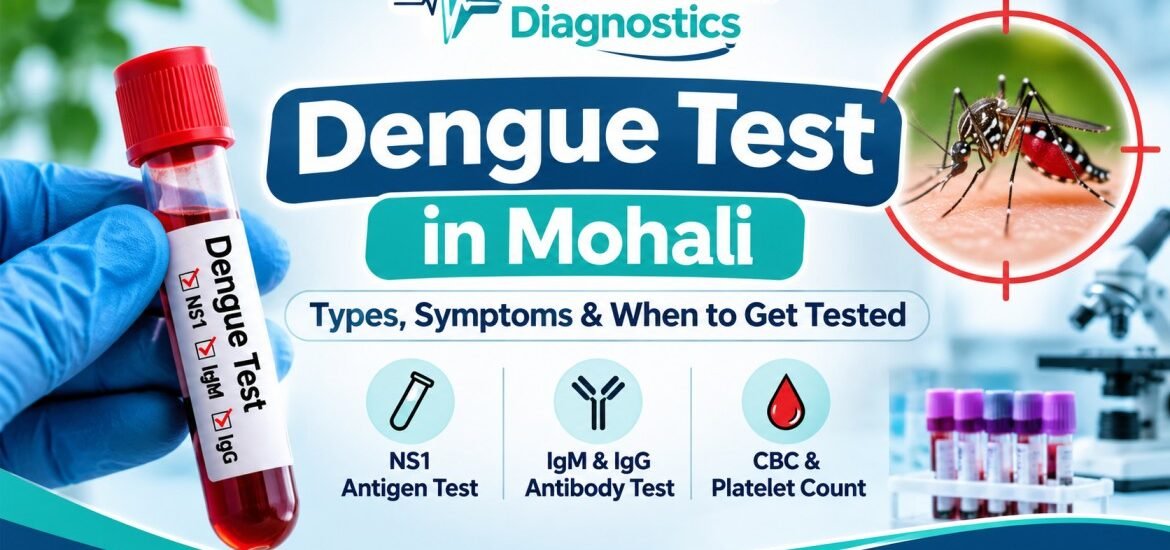
There are different tests available for dengue diagnosis, including the NS1 antigen test, IgM and IgG antibody tests, and Complete Blood Count (CBC). Each test provides different information about the infection. Understanding these tests can help you know when testing may be needed and why doctors sometimes recommend repeat blood investigations.
This article explains the common symptoms of dengue, available diagnostic tests, the importance of platelet monitoring and when you should seek medical attention.
What Is Dengue Fever?
Dengue is a viral infection transmitted through the bite of an infected female Aedes mosquito. These mosquitoes can breed in stagnant water collected in coolers, flower pots, discarded containers, tyres and other places around homes.
Dengue can affect children and adults. Some people experience mild symptoms, while others may develop complications that require medical supervision or hospital treatment.
The infection does not produce identical symptoms in everyone. Some patients experience fever and body pain, while others may also have nausea, vomiting, skin rashes or severe weakness.
Dengue cannot be confirmed through symptoms alone. A doctor may recommend a Dengue Test in Mohali after evaluating your symptoms, medical history and the duration of the fever.
Common Symptoms of Dengue
Dengue symptoms usually develop after an incubation period of around 4–10 days following an infected mosquito bite. Symptoms can range from mild to severe.
Some commonly reported symptoms include:
- High fever: A sudden rise in body temperature is one of the common signs of dengue.
- Severe headache: Patients may experience persistent or intense headaches.
- Pain behind the eyes: Discomfort around or behind the eyes can occur.
- Muscle and joint pain: Body aches and joint pain are frequently reported.
- Nausea and vomiting: Some people experience stomach discomfort or vomiting.
- Skin rash: A rash may develop during the illness.
- Weakness and fatigue: Tiredness and low energy can continue during recovery.
- Loss of appetite: Some patients experience reduced appetite and general discomfort.
These symptoms may also occur with other viral infections. Therefore, do not assume that every fever is dengue. If you notice several of these symptoms together, consult a healthcare professional for proper evaluation.
When Should You Get a Dengue Test?
Testing may be recommended when a person develops symptoms that suggest dengue, particularly during periods when mosquito-borne infections are circulating.
A doctor may advise a Dengue Test in Mohali in the following situations:
- You develop a sudden fever along with headache or body pain.
- You experience pain behind the eyes with fever.
- You have fever accompanied by nausea, vomiting or skin rash.
- Your symptoms continue or become worse over time.
- Your doctor suspects dengue after examining your symptoms.
- You require follow-up blood investigations to monitor your condition.
The timing of testing is important because different tests detect different markers of dengue infection. An NS1 antigen test is generally useful during the early phase, whereas antibody tests become more useful as the illness progresses.
Do not delay medical consultation if your symptoms are getting worse. A doctor can decide which investigations are appropriate based on your condition.
Types of Dengue Tests Available
Different laboratory investigations help doctors identify dengue infection and monitor changes in the patient’s blood. The selection of tests depends on the duration of illness and clinical assessment.
1. Dengue NS1 Antigen Test
The NS1 antigen test detects a protein produced by the dengue virus. It is commonly used during the early stage of infection, particularly within the first seven days after symptoms begin.
Doctors may recommend this test when a patient develops sudden fever and other symptoms associated with dengue.
When is it useful?
- During the early days of fever.
- When dengue infection is suspected.
- When the doctor needs evidence of an early-stage infection.
A positive NS1 result supports a diagnosis of current dengue infection. However, a negative result does not always rule out dengue. Further testing may be required if symptoms continue or clinical suspicion remains high.
2. Dengue IgM Antibody Test
The IgM antibody test detects antibodies produced by the immune system in response to dengue infection.
IgM antibodies generally become detectable around four to five days after symptoms begin. Their levels may remain detectable for several weeks or longer.
Doctors may recommend this test when a patient has been experiencing fever for several days or when the early stage of infection has passed.
A positive IgM result may indicate a recent dengue infection. However, the result should be interpreted alongside symptoms and other investigations because cross-reactions with related viruses can sometimes occur.
3. Dengue IgG Antibody Test
The IgG antibody test detects another type of antibody produced by the immune system. These antibodies generally develop later and can remain in the body for a long time.
An IgG-positive result may indicate previous exposure to dengue. In some situations, it can also be associated with a later-stage or secondary infection.
However, IgG testing alone is generally not sufficient to confirm an acute dengue infection. Doctors may consider IgM, NS1 and other findings before reaching a conclusion.
4. CBC Test for Dengue
A Complete Blood Count (CBC) is an important blood investigation that measures different components of blood.
Doctors may recommend a CBC during dengue illness to monitor blood counts and identify changes that may require closer observation.
A CBC report generally includes:
- Platelet count: Measures the number of platelets in the blood.
- White blood cell count: Helps assess the number of infection-fighting white blood cells.
- Haemoglobin: Measures the oxygen-carrying protein in red blood cells.
- Haematocrit: Measures the proportion of blood made up of red blood cells.
A CBC test does not confirm dengue on its own. It provides useful information that helps doctors monitor the patient’s condition.
5. Dengue Platelet Count Test
Platelets are blood components that help the body form clots and control bleeding. A reduction in platelet count can occur during dengue infection.
The platelet count is generally included in a CBC report. Depending on the patient’s condition, doctors may recommend repeat CBC testing to monitor platelet levels and haematocrit.
It is important to understand that a low platelet count does not automatically mean severe dengue. Similarly, a normal platelet count does not guarantee that complications cannot develop.
Doctors assess the patient’s overall condition, including blood pressure, hydration, bleeding symptoms and other clinical findings, before deciding on treatment.
Which Dengue Test Should You Take Based on Fever Duration?
The appropriate test depends partly on how many days have passed since the symptoms started.
| Duration of symptoms | Tests a doctor may consider |
|---|---|
| Days 1–3 | NS1 antigen or RT-PCR |
| Days 4–7 | NS1 antigen or RT-PCR, along with IgM testing |
| After day 7 | IgM antibody testing; additional tests if required |
This is a general guide, not a fixed testing schedule. The doctor will select investigations according to your symptoms, medical history and clinical condition.
If you are planning a Dengue Test in Mohali, mention the exact date your fever started. This information helps the doctor and laboratory team understand which test may be suitable at that stage.
Understanding Dengue Test Results
Once the blood sample has been tested, the laboratory provides a report containing the test findings. However, a laboratory result should not be interpreted separately from the patient’s symptoms.
Here is a basic explanation of common results:
- NS1 Positive: Supports the presence of a current dengue infection.
- IgM Positive: May indicate a recent dengue infection.
- IgG Positive: May indicate previous exposure or, in some situations, a later-stage infection.
- Low Platelet Count: Indicates fewer platelets than the laboratory reference range.
- Low WBC Count: Can occur during dengue but is not specific to the infection.
- Rising Haematocrit: May indicate fluid leakage and requires prompt medical assessment.
A negative test does not always exclude dengue. The timing of sample collection can affect the result. If symptoms continue, your doctor may recommend repeat testing or another investigation.
Avoid making treatment decisions based only on platelet count or a single test result.
Warning Signs of Severe Dengue
Most people recover from dengue with appropriate medical care. However, some patients may develop severe dengue, which requires urgent medical attention.
Warning signs can appear as the fever starts to settle. Therefore, a reduction in fever does not always mean that the infection has passed.
Seek urgent medical attention if you experience:
- Severe or persistent abdominal pain.
- Repeated vomiting.
- Bleeding from the nose or gums.
- Blood in vomit or stool.
- Unusual drowsiness or restlessness.
- Difficulty breathing.
- Cold, pale or clammy skin.
- Markedly reduced urine output.
Do not wait for platelet levels to fall before seeking medical help if these symptoms occur. Severe dengue is assessed through the patient’s overall clinical condition, not just one blood test.
How to Prepare for a Dengue Blood Test
Most dengue investigations require a blood sample collected by a trained laboratory professional. NS1 antigen, IgM, IgG and CBC tests generally do not require fasting when ordered individually.
Before going for testing, keep the following points in mind:
- Share your symptoms: Inform the doctor about your fever, body pain and other symptoms.
- Mention when the fever started: The duration of illness helps determine the appropriate test.
- Discuss previous dengue infection: Earlier exposure may be relevant when interpreting antibody results.
- Ask about fasting: If other blood tests are included, confirm their preparation requirements.
- Share medication details: Tell your doctor about medicines or supplements you are taking.
If dengue is suspected, avoid self-medication. Do not take aspirin or ibuprofen unless specifically advised by your doctor, as these medicines may increase bleeding risk. Your doctor can recommend suitable fever management and hydration.
Why Timely Dengue Testing Matters
Dengue symptoms can overlap with other infections, making proper medical evaluation important. Timely testing can help doctors understand whether dengue infection is likely and decide whether further monitoring is needed.
NS1, IgM and IgG tests provide different information depending on the stage of illness. CBC testing helps monitor blood counts and identify changes that may need medical attention.
Getting a Dengue Test in Mohali at the appropriate stage can support accurate clinical assessment. It is equally important to follow your doctor’s advice after receiving the report, especially if symptoms persist or become worse.
Dengue Testing at Pulse Clinics & Diagnostics, Mohali
At Pulse Clinics & Diagnostics, Mohali, patients can consult healthcare professionals for guidance on dengue diagnosis and related blood investigations. If you are experiencing symptoms such as fever, headache, body pain, weakness or nausea, the clinic can help you understand which tests may be appropriate, including the Dengue NS1 Antigen Test, IgM and IgG Antibody Tests, and Complete Blood Count (CBC).
The medical team can guide you based on your symptoms and health condition, helping you take the right next step. If you are looking for a Dengue Test in Mohali, contact Pulse Clinics & Diagnostics to enquire about test availability, sample collection arrangements and reporting details.
Final Thoughts
Dengue diagnosis involves more than checking for fever or looking at platelet counts. NS1 antigen, IgM and IgG antibody tests help identify different markers of infection, while CBC testing helps doctors monitor changes in blood counts.
If you develop symptoms that may indicate dengue, seek medical advice rather than relying on self-diagnosis. A properly timed Dengue Test in Mohali, combined with medical evaluation and appropriate monitoring, can help identify the infection and support timely care.